
DECEMBER 1, 2025
Why A Single Definition of Leadership is An Illusion
Introduction
In a discussion about the education requirements of people who teach, coach and consult in leadership, the argument was raised about how we can’t functionally define or measure leadership, thus, “If you can't define or measure it, then you can't manage it.” This was a great discussion because it caused me to reflect on many other human dimensions that cannot be absolutely defined.
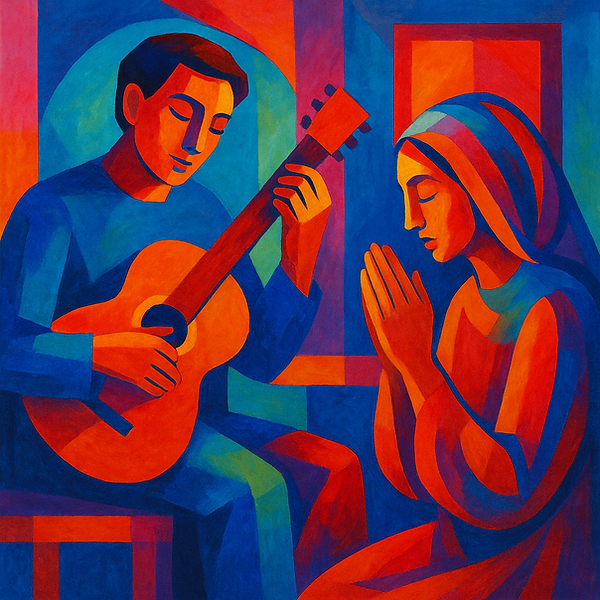
We often talk about leadership as if it should have a single, universal definition, as if one sentence could capture something as complex, contextual, and deeply human as guiding and influencing people. But leadership is more like art, music, beauty, love, justice, culture, or wisdom, concepts that resist rigid definition because they are lived, felt, and interpreted rather than neatly categorized. People have been working “cooperatively” (leading and following) for tens of thousands of years. We’ve only been trying to fit this behavior in a definition box for about the last few hundred years.
Here is a list of some other human topics that, like leadership, art, and music, resist a single universal definition because they are subjective, contextual, culturally shaped, and experienced more than they are agreed upon in definition:
-
Beauty, varies across cultures, eras, and individual perception; what is “beautiful” is both personal and socially constructed.
-
Creativity, unclear whether it is a trait, a process, a behavior, or an outcome; definitions differ across psychology, business, and the arts.
-
Love, ranges from biological drive to emotional bond to moral commitment; no consensus across disciplines.
-
Happiness/Well-being, philosophical, psychological, and cultural interpretations differ widely.
-
Wisdom, described as insight, judgment, philosophical reflection, or moral maturity depending on the field.
-
Culture, a complex mix of norms, symbols, behaviors, and shared meaning; constantly evolving and diversely interpreted.
-
Justice, legal, moral, and philosophical perspectives collide, making universal definition nearly impossible.
-
Identity, shaped by biology, psychology, culture, and personal narrative; has no single stable meaning.
-
Morality/Ethics, varies with religion, philosophy, society, and context.
-
Spirituality, can be religious, philosophical, psychological, or experiential.
-
Talent, debated whether it's innate, learned, contextual, or domain-specific.
-
Influence, overlaps with power, persuasion, charisma, and social dynamics; hard to narrowly define.
-
Intelligence, dozens of competing models (IQ, emotional intelligence, multiple intelligences, etc.).
Why these concepts, like leadership, are similarly difficult to absolutely define:
Each of these topics:
-
changes depending on context, culture, and purpose
-
is expressed through behavior but rooted in deeper human meaning
-
is interpreted more than measured
-
requires multiple disciplinary lenses (psychology, sociology, biology, philosophy)
-
reveals more about the observer than the concept itself
These phenomena shift across cultures, evolve through time, and mean something slightly different to every person who experiences them. Leadership is no different: it expresses itself uniquely in every relationship, every team, and every moment of human connection.
Because of this, leadership cannot be reduced to quick tips, personality traits, or one-size-fits-all models. Just as creativity or beauty is shaped by context, history, and the eye of the beholder, leadership is shaped by the needs of the group, the dynamics between people, and the environment in which it unfolds. Trying to define leadership too narrowly is like trying to define art or music with a single descriptive statement, it undermines the rich diversity of how humans actually lead and follow.
The most meaningful leadership emerges from interaction, shared purpose, and the subtle behavioral and relational patterns that occur between people, and every one of these interactions is different.
When we recognize leadership as one of these complex human phenomena, we elevate the conversation. We stop searching for the illusion of a perfect definition and instead focus on understanding the process, how trust is built, how influence flows, how people synchronize their efforts and navigate uncertainty together.
Embracing this complexity opens the door to more authentic, behavior-based, and human-centered approaches. It allows leadership development to move beyond slogans and into the realm of real, measurable human connection, where leadership has always lived.
Quotes to Put Into Practice
> You don’t love someone for their looks or their clothes, or for their fancy car, but because they sing a song only you can hear.” – Oscar Wilde
> “There is always some madness in love. But there is also always some reason in madness.” - Friedrich Nietzsche